
- EICRs have been legally mandatory for all privately rented homes in England since April 2021.
- Reports must be carried out by a qualified electrician and renewed every 5 years (or at change of tenancy if sooner).
- Any C1 or C2 fault must be remedied within 28 days of the report date (or sooner if specified).
- Landlords who fail to comply face fines of up to £30,000 per property.
- A copy of the EICR must be given to existing tenants within 28 days and to new tenants before move-in.
What Is an EICR?
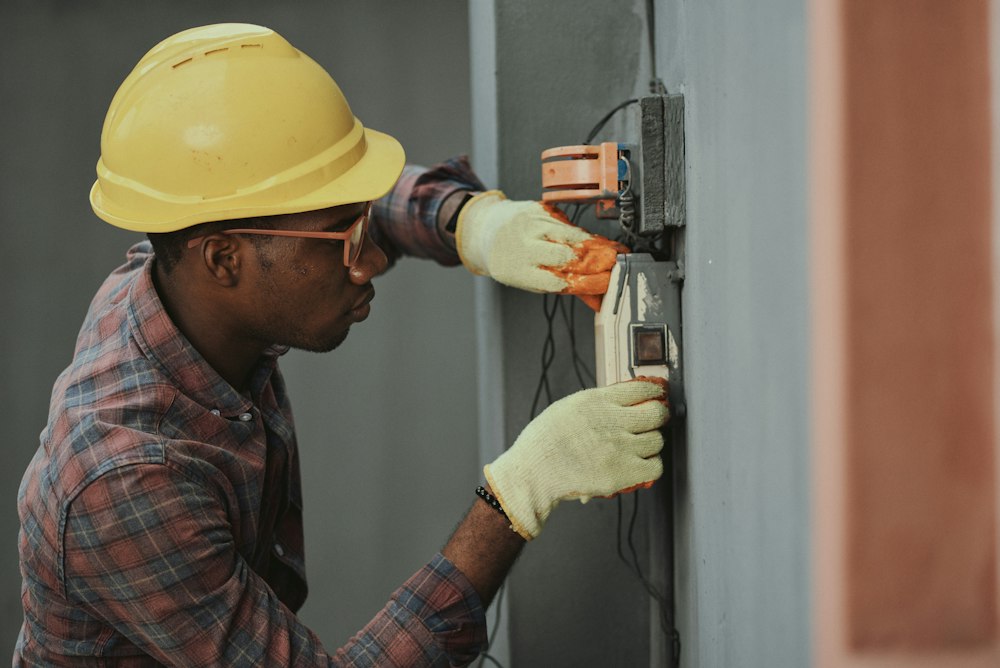
An Electrical Installation Condition Report (EICR) — sometimes called a Periodic Inspection Report (PIR) — is a formal assessment of the fixed electrical installation in a property. It covers everything permanently wired in: the consumer unit (fuse box), all circuits, wiring, sockets, switches, light fittings, and earthing arrangements.
Unlike a visual check, an EICR involves physical testing of circuits using calibrated instruments. The inspector tests insulation resistance, earth continuity, protective device operation, and polarity throughout the installation. The result is a formal report graded against BS 7671 (IET Wiring Regulations) — the UK wiring standard.
An EICR covers fixed electrical installations only — not portable appliances (which require separate PAT testing), not gas safety, and not energy efficiency. Each is a distinct legal obligation with its own certificate.
The Law: When EICRs Became Mandatory
The Electrical Safety Standards in the Private Rented Sector (England) Regulations 2020 introduced mandatory EICRs for private landlords on a phased basis:
Similar legislation applies in Scotland (Housing (Scotland) Act 2006) and Wales (Renting Homes (Wales) Act 2016). Inspection intervals and specific duties differ — always verify the rules for your jurisdiction.
What Does an EICR Test?
The inspection covers the entire fixed electrical installation. A qualified electrician will systematically test and assess:
- Consumer unit (fuse box) — condition, age, correct labelling, presence of RCDs and surge protection
- Main earthing and bonding — connections to water and gas pipework, adequacy of earth conductor
- All circuits — ring finals, radials, lighting circuits, dedicated circuits for cookers and showers
- Insulation resistance — tests for cable deterioration or damage behind walls
- Socket outlets and switches — correct polarity, secure fixing, no signs of overheating
- Light fittings — safe installation, correct lamp types, no signs of heat damage
- Protective device operation — RCDs tested to confirm they trip within the required time
- Visual inspection — looking for DIY modifications, unsafe work, or non-compliant installations

Understanding the EICR Fault Codes
Every observation in an EICR is assigned one of four classification codes. The overall outcome is either Satisfactory (no C1 or C2 codes) or Unsatisfactory (one or more C1 or C2 codes identified). A C3 code alone does not cause a fail.
A risk of injury or death exists. The engineer must make safe on the day — sometimes by disconnecting the circuit supply entirely.
Not immediately hazardous but could become so. The EICR will not pass until all C2 items are fully remedied.
Does not comply with current standards but is not dangerous. A pass is still issued — improvement is advisory, not mandatory.
The inspector could not fully assess the item. It must be investigated before the report can be finalised.
If your EICR contains a C1 or C2 observation, you cannot continue to let the property until all items are remedied and a follow-up Electrical Installation Certificate (EIC) or Minor Works Certificate has been issued by the electrician who carried out the repairs.
What Happens After an Unsatisfactory Report?
If your EICR comes back Unsatisfactory, you must act within a strict timetable:
- Immediately — Any C1 (danger present) items must be made safe on the day. The inspector may disconnect the supply to an affected circuit.
- Within 28 days — All C1 and C2 items must be fully remediated (or within the shorter timeframe specified in the report).
- Obtain written confirmation — The electrician must issue an EIC or Minor Works Certificate for each remedial job. This is your proof of compliance.
- Notify tenants and local authority — Send copies of the original EICR and all remedial certificates to tenants within 28 days. Your local authority may also request copies.
Ask your EICR inspector to quote for any required remedial work at the same time. Having the same qualified electrician fix their own findings is faster, cheaper, and avoids disputes about what was identified.
How Long Does an EICR Take?
The duration depends on property size and circuit count:
- Studio or 1-bed flat — 2 to 3 hours
- 2–3 bed house or flat — 3 to 5 hours
- 4+ bed house — 5 to 8 hours, sometimes split over two visits
- HMO or large property — varies; typically quoted per circuit
The electrician will need access to all rooms and the consumer unit area should be unobstructed. Power will be briefly interrupted to individual circuits during testing — tenants should be notified in advance with at least 48 hours' written notice.

How Much Does an EICR Cost in London?
In London, EICR prices typically range as follows for inspection only:
- Studio / 1-bed flat: £120–£180
- 2-bed property: £160–£220
- 3-bed property: £200–£280
- 4+ bed or HMO: £280–£500+
Remedial works — if required — are quoted separately. Bundling your EICR with a Gas Safety Certificate inspection on the same day frequently reduces overall visit costs and minimises tenant disruption.
Book Your EICR Today
NICEIC-registered electricians. Same-week availability across all London areas. Report issued within 24 hours.
Penalties for EICR Non-Compliance
Local authorities are responsible for enforcing the Electrical Safety Standards Regulations. The penalty regime mirrors that of the MEES energy efficiency regulations:
- Up to £30,000 per property for failure to carry out an EICR, failure to remedy C1 or C2 faults, or failure to provide copies to tenants
- Publication on the local authority's public register — a reputational consequence that can affect mortgage and insurance arrangements
- Remedial notice — local authorities can issue a notice requiring compliance; failure to comply escalates the financial penalty
Courts have increasingly treated failure to comply with electrical safety regulations as relevant when assessing Section 21 notices. Landlords without a valid EICR on record are in a vulnerable position if a possession dispute arises.

Practical Tips for Landlords
- Diarise renewal 8 weeks early — EICR-qualified electricians book up quickly, especially across London.
- Keep all certificates permanently — store EICR reports, EICs and Minor Works Certificates indefinitely. They may be requested by tenants, local authorities, insurers or mortgage lenders at any time.
- Check credentials before booking — ask for the registration number with NICEIC, NAPIT or equivalent. Verify it on the scheme's website before confirming the appointment.
- Notify tenants in writing — provide at least 48 hours' written notice before the inspection. Circuit testing will briefly interrupt power to parts of the property.
- Bundle compliance visits — EICR + Gas Safety Certificate on the same day minimises tenant disruption and often reduces cost significantly.
- Act fast on C2 observations — the 28-day window sounds generous, but getting qualified electricians booked in busy periods can take 2+ weeks.
Frequently Asked Questions
Related Guides for Landlords

Gas Safety
Gas Safety Certificates: Everything Landlords Need to Know
Annual CP12 checks are a legal must. Costs, what's inspected, and penalties for non-compliance.

Energy
EPC Ratings: How to Improve Your Property's Score
With MEES tightening to Band C, here's the landlord's guide to boosting your energy rating.

Property Reports
Inventory Reports: Why Every Landlord Needs One
A professional inventory is your strongest protection in a deposit dispute.
Stay Compliant. Book Your EICR Today.
Qualified electricians, same-week availability, and a full report issued within 24 hours — across all London areas.